What the allowance means
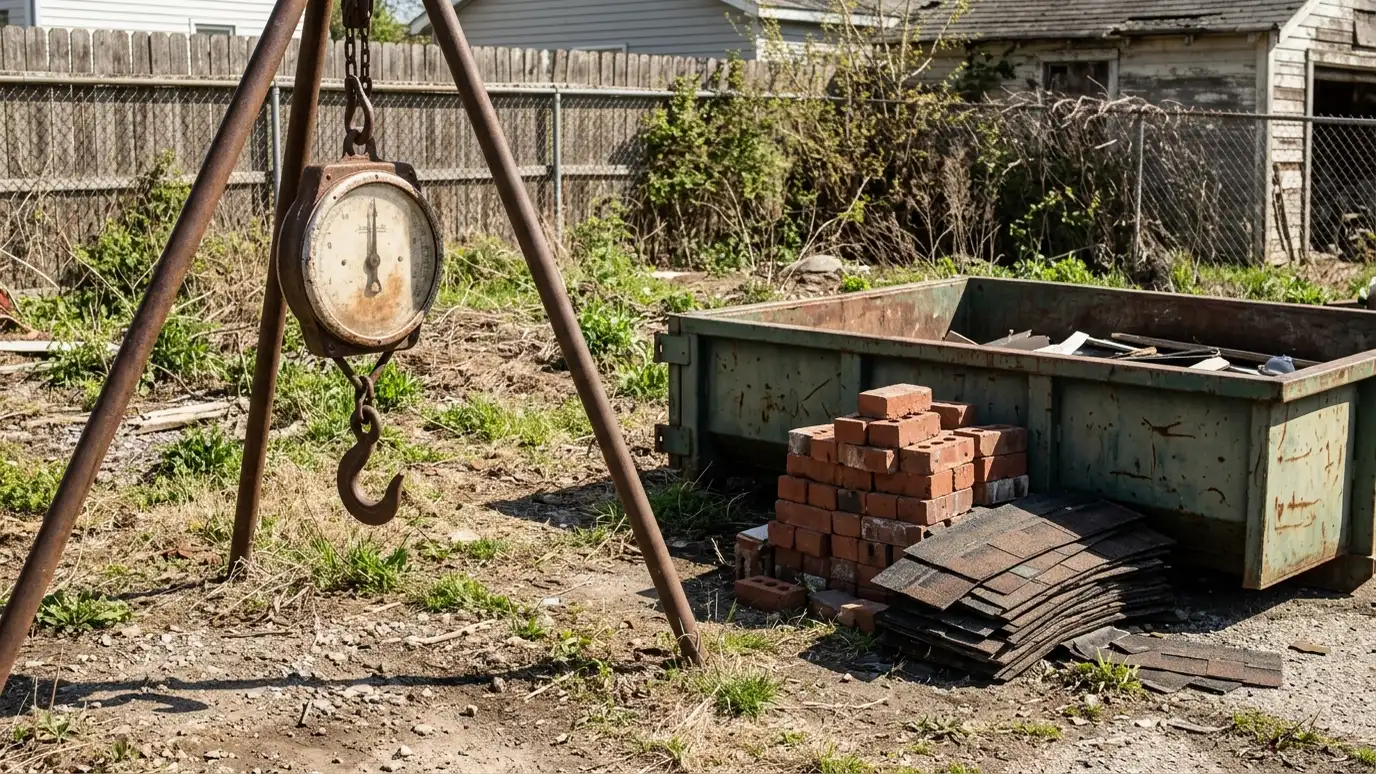
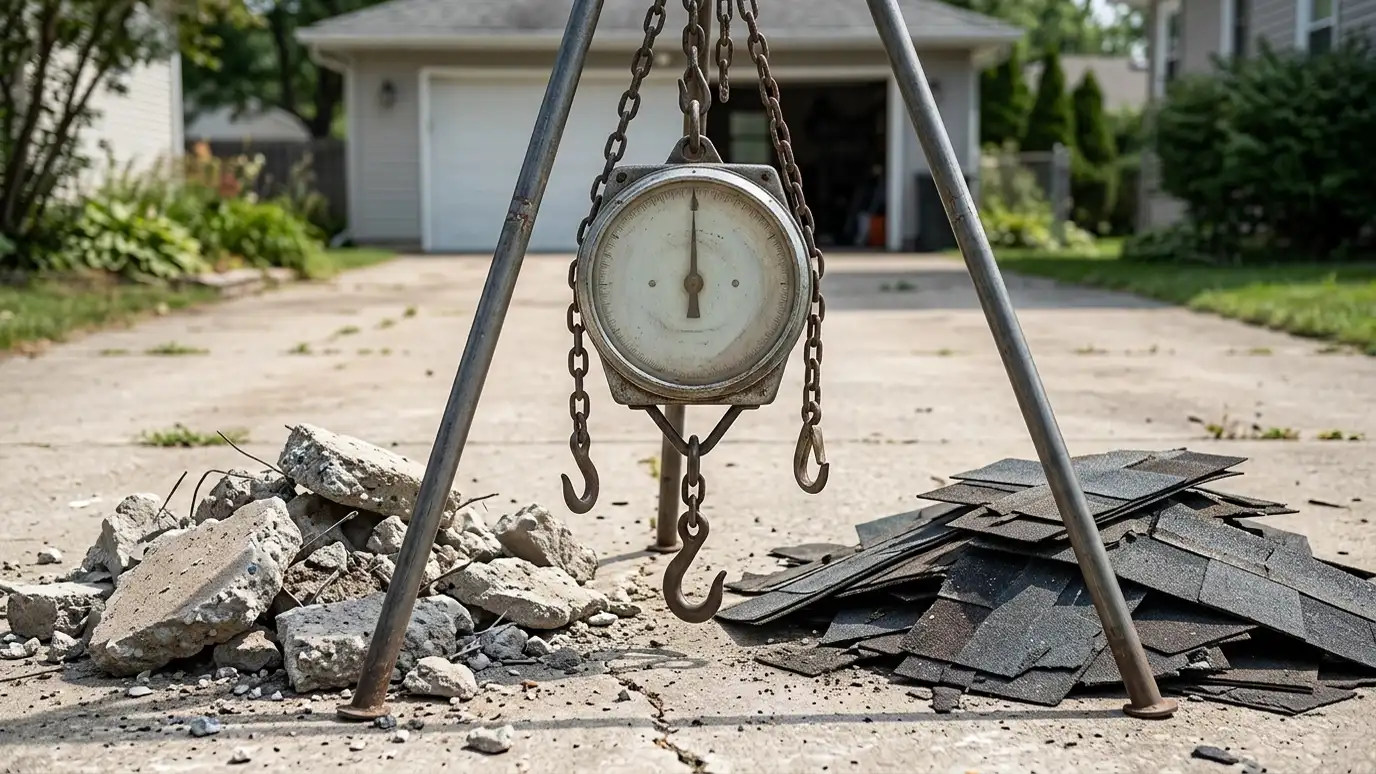
A weight allowance is the amount of weight included in your rental. It exists because trucks and disposal sites have real limits.
Your quote should state it clearly.
Ask how overage is handled before you rent.
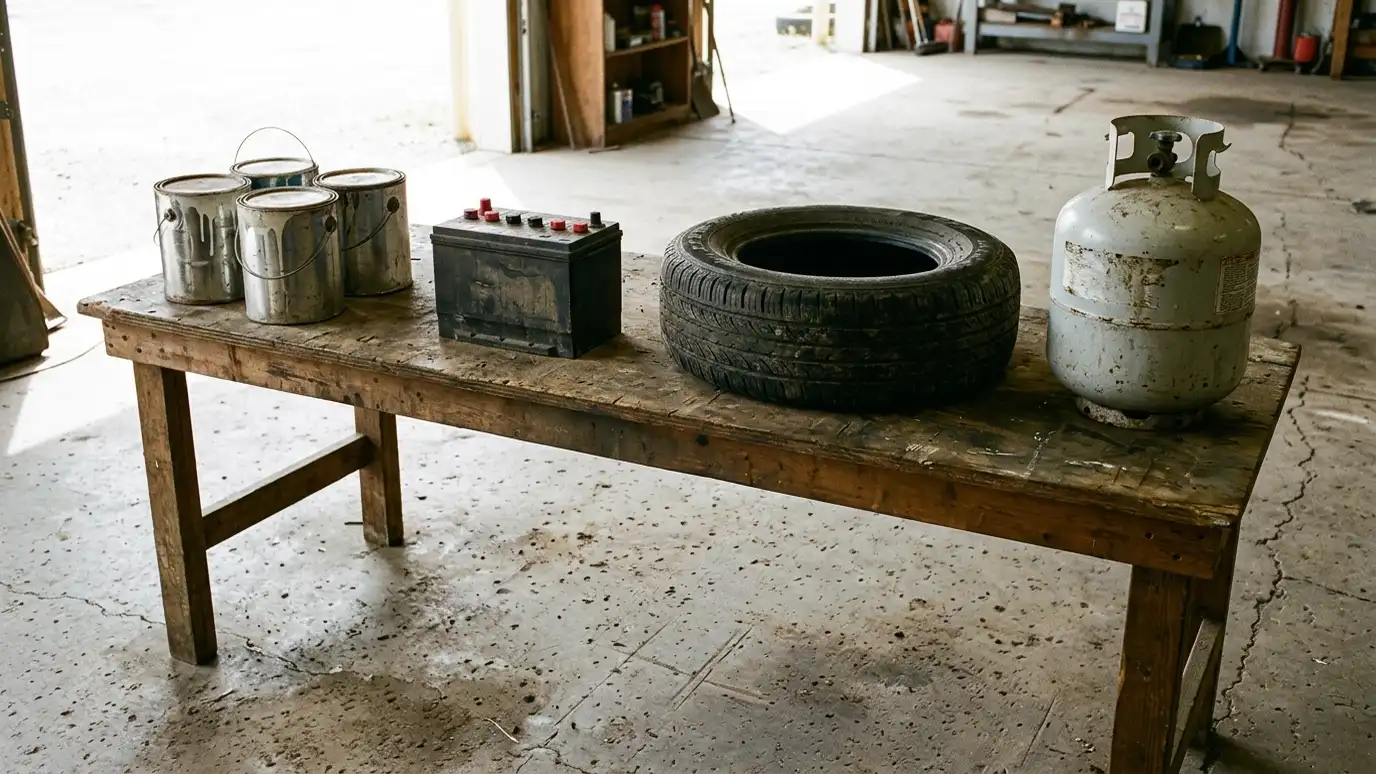
Heavy materials
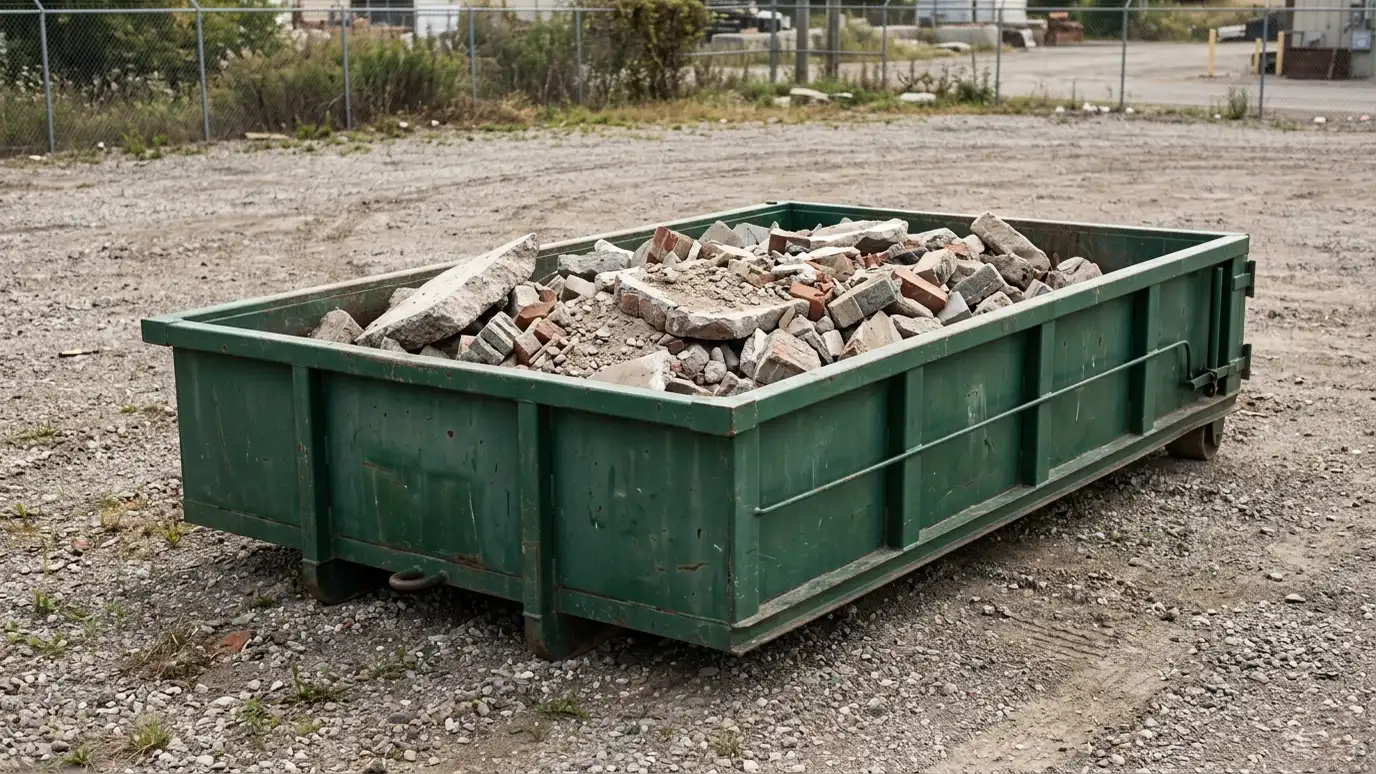
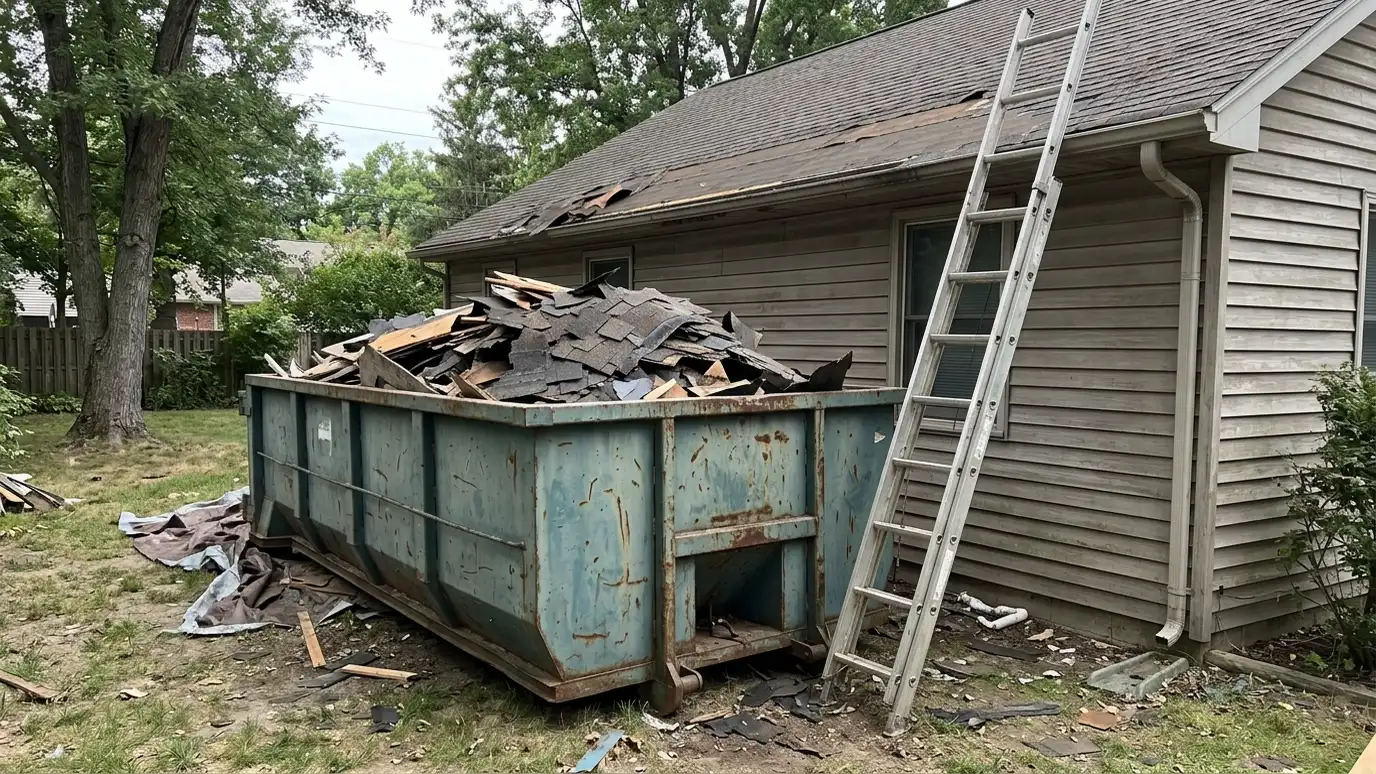
Concrete, brick, block, asphalt, tile, soil, rock and shingles are the usual suspects. A small amount of any of them can reach the limit.
Wet material weighs more than dry material, including drywall, carpet and yard waste.
When in doubt, treat it as heavy.
Light materials
Furniture, cardboard, insulation, dry yard waste and most household items are light for their size. They fill space quickly but weigh little.
Mixed loads fall in between.
A tall container suits light debris well.
Low-side containers
A short container with a fill line is the right tool for heavy material. The walls keep you from overloading it by accident.
Clean loads of a single material are often easier to process.
Several small containers can be safer than one large one.
Loading for weight
Put heavy items first and low, spread them across the floor and keep light items on top. Never stack heavy material in one corner.
Stay below the fill line.
Cover the container in rain.
Estimating
Make a list of materials and amounts and convert them to rough weights. Our material checker does this on your screen.
Leave a margin because real loads vary.
Call us if your estimate is near the limit.
Treat dense material as a weight problem, not a space problem, and use a low-side container.